
Cantonese Catholics Gather for Mass in Sawston
October 14, 2026
St Peter’s Awarded £43,251 For Vital Repairs
October 15, 2026
Dr Ian Watson, a Catholic from North Norfolk, reflects on patriotism, Christian nationalism and the common good.
The relationship between faith, national identity and belonging requires careful Christian reflection. Immigration, cultural diversity and what holds a country together are prominent questions in public life, and faithful Christians can reach different political judgements.
Kingdom over Nation, a new resource from Churches Together in England (CTE), offers a timely contribution. Through Bible studies, videos and reflections from different Christian traditions, it asks what forms us as Christians and where our deepest allegiance lies.
For Catholics, this resonates with the Church’s emphasis on human dignity and the common good. Love of country can be a genuine moral good. Difficulties arise when national identity assumes an absolute or quasi-religious status, or Christianity is used to legitimise a political project.
Events this summer in Norfolk and elsewhere have shown how divisive questions of immigration and belonging can become. However, expressing concerns about immigration does not make someone a Christian nationalist.
Christian nationalism arises when Christian and national identities become so closely bound that Christianity is used to endorse a particular political understanding of the nation and who belongs within it. The danger is that faith serves a political project rather than holding it to the demands of the Gospel.
Christians can disagree about borders, integration and government responsibilities. What matters is whether our convictions remain subject to the dignity of every person and our responsibility for the common good. Christian unity requires an allegiance to Christ deeper than our political differences.
Explore CTE’s Kingdom over Nation resource
These questions have occupied me for some time. In my recent article, When the Cross Is Wrapped in the Flag, I explored the distinction between patriotism and enlisting Christianity in a political project that gives the nation a significance it cannot properly bear.
Read ‘When the Cross Is Wrapped in the Flag’
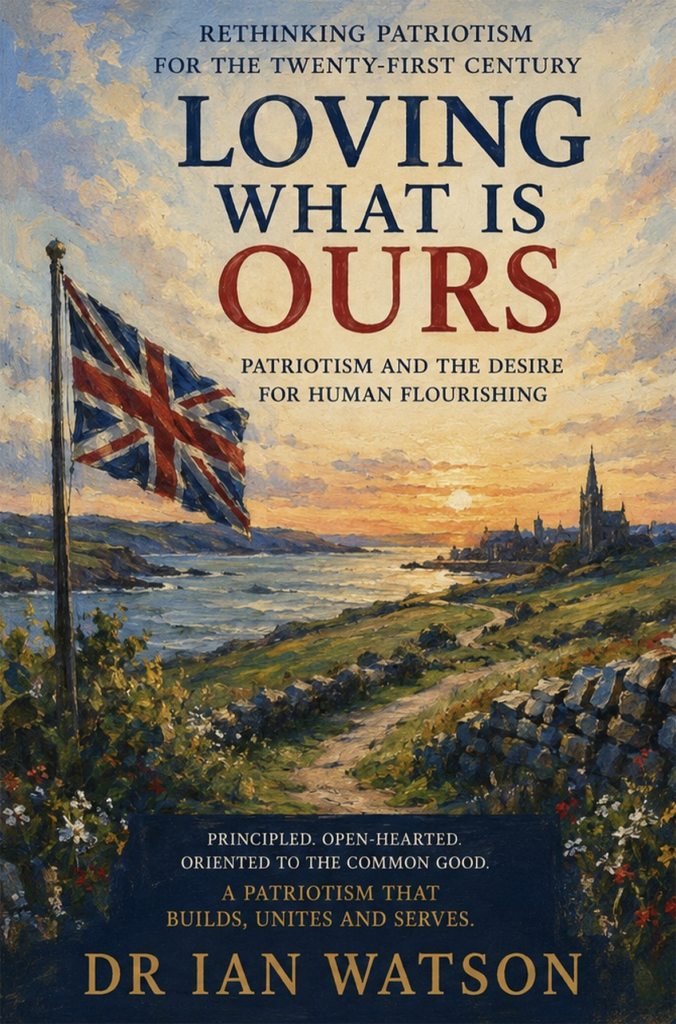
My new book, Loving What Is Ours: Patriotism and the Desire for Human Flourishing, develops this discussion. Drawing on my doctoral research in moral philosophy, it asks whether love of country can be morally justified. Its final chapters explore patriotism, Christian nationalism, human dignity and the common good through Catholic Social Teaching. Written from a Catholic perspective, it invites readers of all faiths and none into the conversation.
Find Loving What Is Ours on Amazon
A useful companion is British Future’s England United: Pride not Prejudice, which offers practical guidance for constructive conversations about identity and belonging.
Read England United: Pride not Prejudice
In a divided age, Christians should demonstrate that love of country need not depend on suspicion of others. Patriotism is at its best when it serves the common good. Our faith asks that it also honours the equal dignity of those beyond our national and cultural boundaries.
Dr Ian Watson is County Ecumenical Officer for Norfolk and Waveney and attends the Diocese of East Anglia’s Commission for Dialogue and Unity.