
OLEM Added to Heritage at Risk Register
November 6, 2026
Bishop Peter Calls for Remembrance and Peace
November 9, 2026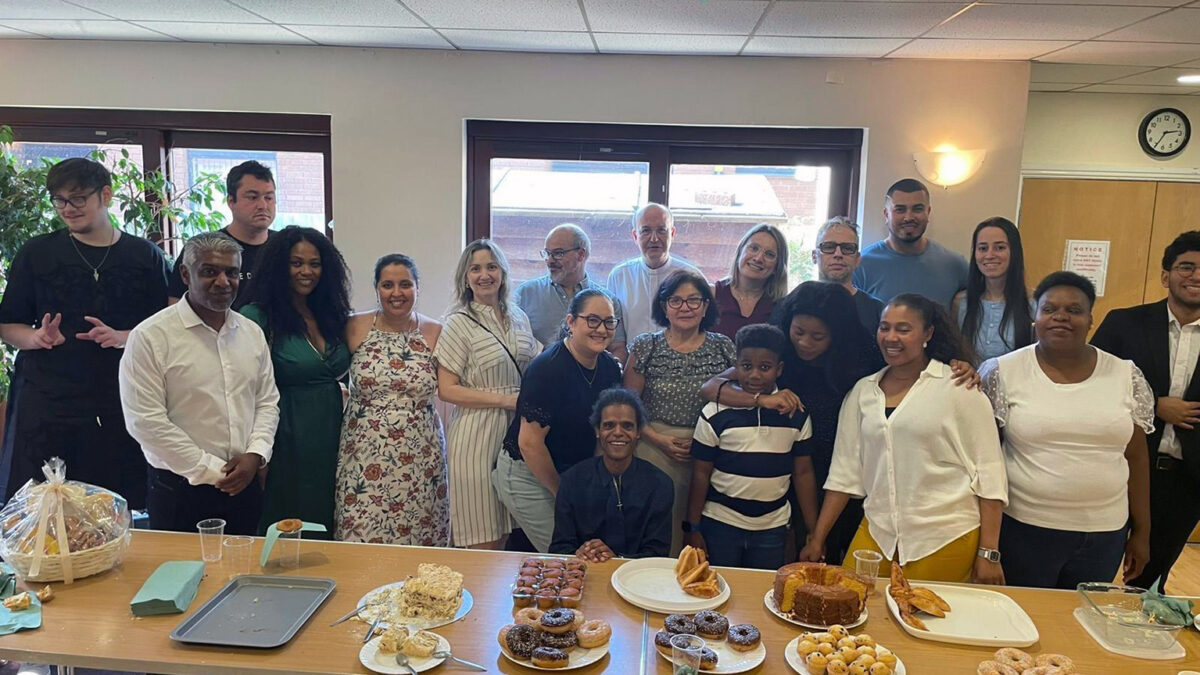
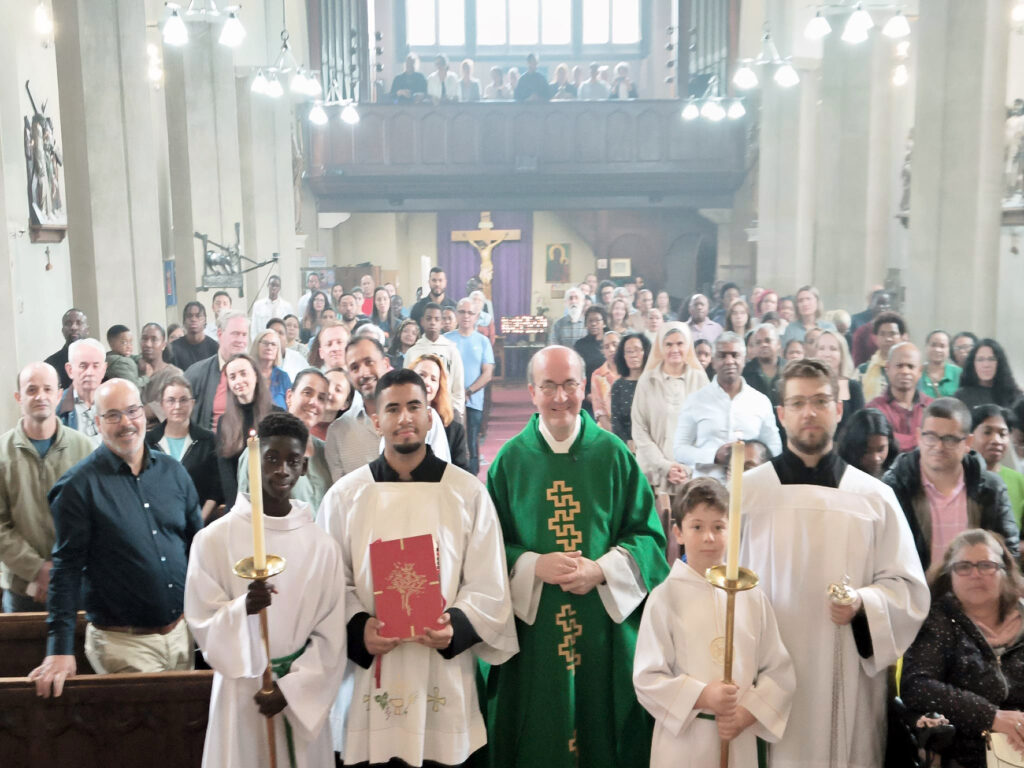
The Portuguese-speaking Catholic community in the Diocese of East Anglia has much to be grateful for as it bids farewell to Fr Erico de Mello Falcao, who has dedicated more than ten years to its pastoral care.
Fr Erico originally came to the United Kingdom from Brazil for a visit. During his time here, he happened to meet Bishop Alan Hopes in Walsingham. Their meeting was to have a lasting impact on the life of the Portuguese-speaking Catholic community in East Anglia.
Bishop Alan spoke to Fr Erico about the growing need for a chaplain to serve Portuguese-speaking Catholics living in the Diocese. Recognising the importance of providing pastoral care in their own language and within their cultural traditions, Fr Erico sought permission from his bishop in Brazil to remain in East Anglia. Permission was granted for an initial period of three years.
What was intended to be a three-year mission would eventually become more than a decade of generous service.
Fr Erico initially stayed with Fr John Minh at St Luke’s Parish in Peterborough. He later served temporarily at St Jude the Apostle in Whittlesey before being appointed parish priest of St Dominic’s in Downham Market.
From Downham Market, his ministry gradually extended across the Diocese. He travelled widely to celebrate Mass and provide pastoral care for Portuguese-speaking Catholics, visiting Great Yarmouth, King’s Lynn, Thetford, Wisbech, Cambridge and Peterborough, among other communities.
His presence became a source of encouragement and unity for Catholics who, although living in different parts of the Diocese, shared a common language, faith and cultural heritage. On two occasions, Fr Erico was asked to extend his stay, eventually bringing his service to more than ten years.
The Portuguese-speaking Catholic community in the Diocese may number as many as 10,000 people, with members originating from Portugal, Brazil, East Timor and several African nations.
For many migrants, the opportunity to attend Mass in their own language is particularly important. It provides spiritual nourishment and a sense of belonging, identity and continuity with their faith traditions.
The pastoral care of migrants has long been recognised as an important responsibility of the Church. The Pontifical Council for the Pastoral Care of Migrants and Itinerant People’s 2004 instruction, Erga migrantes caritas Christi, recalls the earlier decree Ethnografica studia of 1914, which emphasised the responsibility of the local Church to assist immigrants and encouraged appropriate linguistic, cultural and pastoral preparation for clergy.
This remains highly relevant today. The experience of the Portuguese-speaking community in East Anglia demonstrates the importance of responding to the spiritual needs of people who have made their homes in a new country.
As Fr Erico’s period of service drew to a close, preparations were already being made for the future. Before his farewell Mass on 27 September 2026 at St Peter and All Souls in Peterborough, he contacted his bishop in Brazil to discuss finding another priest to continue the ministry. His bishop has identified a priest who may come to the Diocese in the near future.
This offers hope for continued collaboration between the Church in Brazil and the Diocese of East Anglia, and for the appointment of a native Portuguese-speaking priest to provide long-term pastoral care for the community.
Fr Erico departed on 29 September 2026. In the meantime, several priests have generously volunteered to provide pastoral care and celebrate Mass for Portuguese-speaking Catholics.
They have received the support of Bishop Peter Collins and, in particular, Fr Walter Chenyika, parish priest of St Peter and All Souls. Fr Walter has welcomed the community to gather at his church for Mass in Portuguese once a month.
The Mass normally attracts between 100 and 150 people, reflecting both the strength of faith and the pastoral need within the community.
Fr Erico’s departure marks the end of an important chapter, but his ministry has left a lasting legacy. He has strengthened the bonds between Portuguese-speaking Catholics and the wider Diocese, reminding the Church that migrants are brothers and sisters whose gifts, faith and traditions enrich parish life.
As the community looks towards the future, there is gratitude for Fr Erico’s ministry and for the priests willing to continue serving, alongside hope that a Portuguese-speaking priest will soon be appointed on a more permanent basis.
The words of Our Lord in Matthew 9:37–38 offer a fitting focus for prayer: the harvest is plentiful, but the labourers are few, and we are called to ask the Lord of the harvest to send labourers into his harvest.
May the Lord bless Fr Erico for his years of faithful service, bless the Portuguese-speaking Catholic community of East Anglia, and guide the Diocese as it continues to meet the pastoral needs of this vibrant community.