
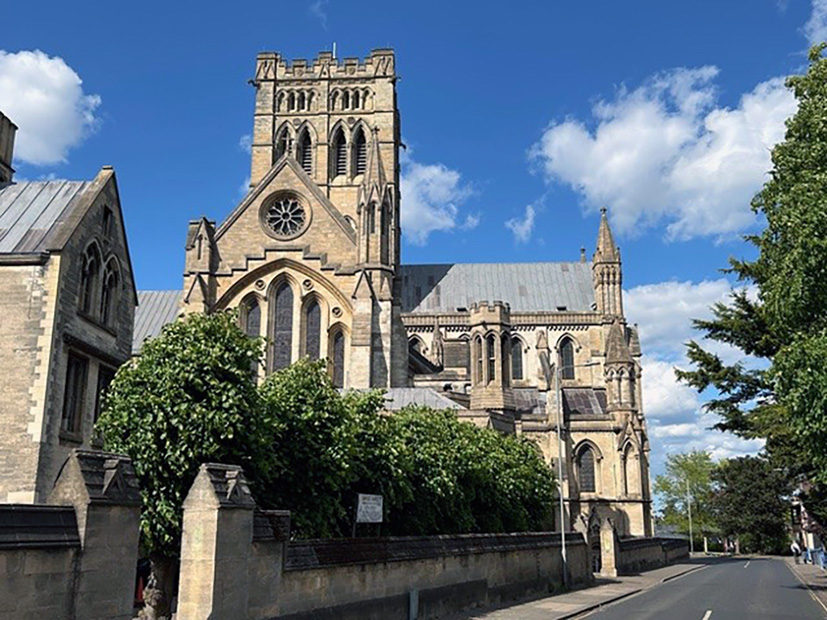
Then, in 1976, with diocesan and parish structures fully operational, Pope Paul VI issued a bull dividing the Diocese of Northampton in two, establishing the Diocese of East Anglia to include more than 50 parishes in Norfolk, Suffolk and Cambridgeshire. By then, Mass attendance in the new Diocese had reached over twenty-five thousand. In that memorable year, on 13 March 1976, the first Bishop of East Anglia, Rt Rev Alan Clark (1976–1995), was appointed, and what had been the very large parish church of St John’s in Norwich (built between 1882 and 1910) was consecrated as the new Cathedral of East Anglia in June 1976.
This is truly something the whole Diocese should celebrate. Bishop Peter has therefore designated this year as a Jubilee Year to mark the 50th anniversary of our Diocese. There will be celebrations at Diocesan, Deanery and Parish levels, and several Diocesan Commissions will also be organising events. All of our Catholic schools have been invited to plan and deliver a project related to the Jubilee during the year. A small working group, under the guidance of Fr John Morrill, is preparing guidance for parishes to celebrate their history, growth and change over the last 50 years, and to look forward to the next stage of our mission. Many parishes have already appointed one or more co-ordinators to assist Parish Priests in organising local celebrations.
Clearly, many of us find that our commitment and knowledge centre on the church we attend for worship, but we hope everyone will come to understand and celebrate their parish, whether it has one church or several. It can sometimes be difficult to feel a sense of belonging to larger geographical areas such as the Diocese. For this reason, we have set the following aims for our year of celebration.
Firstly, it should help all parishioners and clergy understand the history and role of the Diocese, and the important places within it that have influenced and shaped our Catholic lives. Secondly, we should consider and learn from the changes of the past 50 years – both the blessings and the challenges. Thirdly, we should reflect on how our Catholic lives are changing: our organisation, congregations, volunteering, buildings, music and liturgy. Finally, reflecting on the past and celebrating the present should inspire us to contribute to the future of the Church in our parishes and in the Diocese as a whole.
As a contribution to this, the working group will provide a monthly feature in this Diocesan newspaper highlighting locations in the Diocese that are special to us – places everyone should know about and, we hope, be inspired to visit and explore. East Anglia is rich in events, buildings and people who have shaped our ability to worship God and gain strength to live active Christian lives in love of God and neighbour. We will focus on one or two such places each month, beginning next month.
I hope you will enjoy discovering these places and take the opportunity to explore them further as we celebrate the blessings of our region and thank God for our fifty years as a Diocese. To whet your appetite: can you name these three places, and why are they important to us? You will find the answers to these and many other fascinating sites in the Diocese over the coming months of 2026.
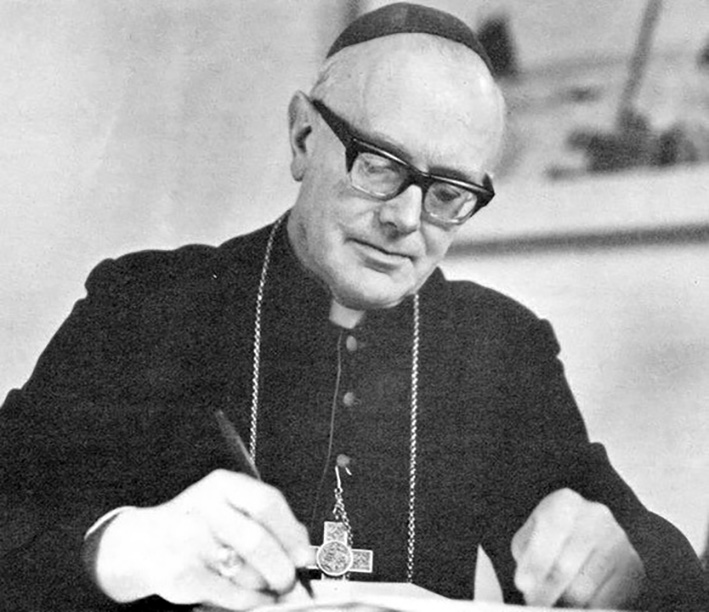
Rt. Rev Alan Clark (1976-1995) First Bishop of East Anglia