
New Catholic DEO for Norfolk and Waveney
January 5, 2026
Help HCPT Give Children a Life-Changing Pilgrimage
January 6, 2026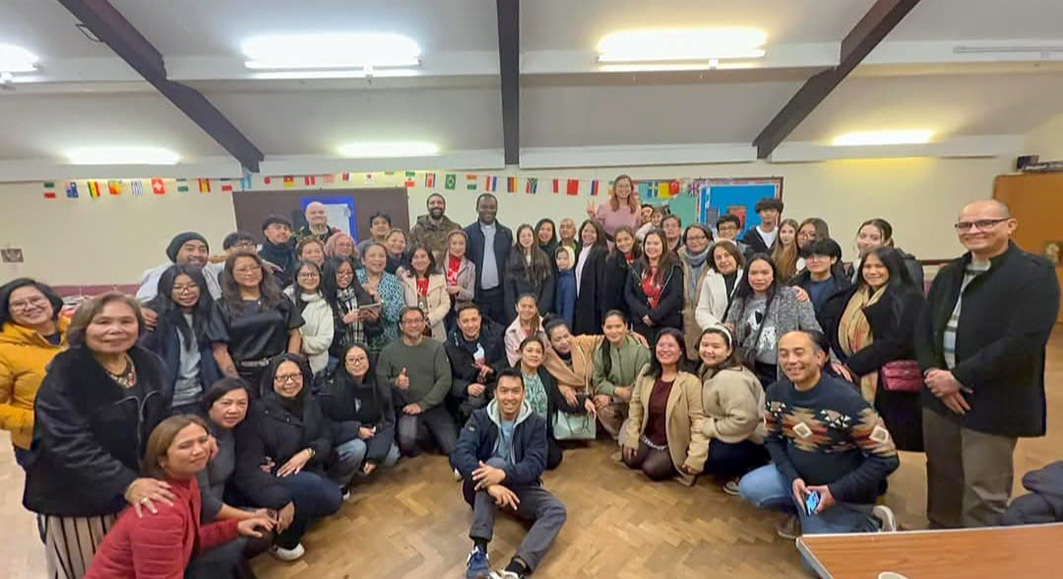
Filipino parishioners at St Peter’s Church in Gorleston joyfully revived the cherished simbang gabi tradition, uniting the community in prayer, music, cultural celebration and shared hospitality in the lead-up to Christmas. Cynthia Wilson reports.
‘Simbang gabi’, Filipino for ‘night Mass’, is a nine-day series of novena Masses attended by Filipino Catholics in anticipation of Christmas. Held from 16 to 24 December at varying times, this cherished tradition began during the Spanish era in the Philippines and has since become a distinct cultural practice symbolising community and sharing. (Source: Wikipedia)
Around 50 to 60 parishioners from St Peter’s Catholic Church, Gorleston, attended a Filipino-led simbang gabi on Tuesday, 16 December 2025, celebrated by Fr Alvan Ibeh. Introduced at the parish only last year, the tradition is gradually gaining popularity among local parishioners in the Great Yarmouth area.
It was a joy to hear Filipino Christmas songs led by the Filipino choir and to see children reading the bidding prayers. Participating in the celebration brought back memories of attending simbang gabi with family and friends in the Philippines, truly a feeling of home away from home. It also prompted reflection on how these joyful devotions of prayer and music have spread across the world. I hope our second generation of Filipino British children will also come to understand the meaning of this devotion and form their own cherished memories. As Fr Alvan said, “We hope to do more next year, by God’s grace.”
Simbang gabi is believed to have begun during early Spanish rule, originally intended for farmers who started work before sunrise to avoid the midday heat. In our local parish it is held in the evening to accommodate hardworking Filipino migrants whose schedules make evening attendance more feasible. Some hospital staff even swapped shifts to take part.
In keeping with tradition, coffee, tea and Filipino Christmas treats including rice cakes (puto bumbong) and coconut-based sweets were served in the church hall after Mass. Parishioners brought dishes to share, symbolising blessings, hope, resilience and the togetherness of a community of faith, much like the guiding star of Bethlehem.
It was heart-warming to see the contributions of those who cooked with love, prepared the hall and helped with the clean-up. The Filipino spirit of bayanihan, or working together, was truly alive. And no Filipino gathering is complete without photos, conversations and more singing. With spirits lifted and stomachs full, we returned home with gratitude and blessings.