
A Rugby Journey of Faith, Service and Solidarity
February 4, 2026
Bishop Hosts Luncheon and Mass for Seminarians
February 6, 2026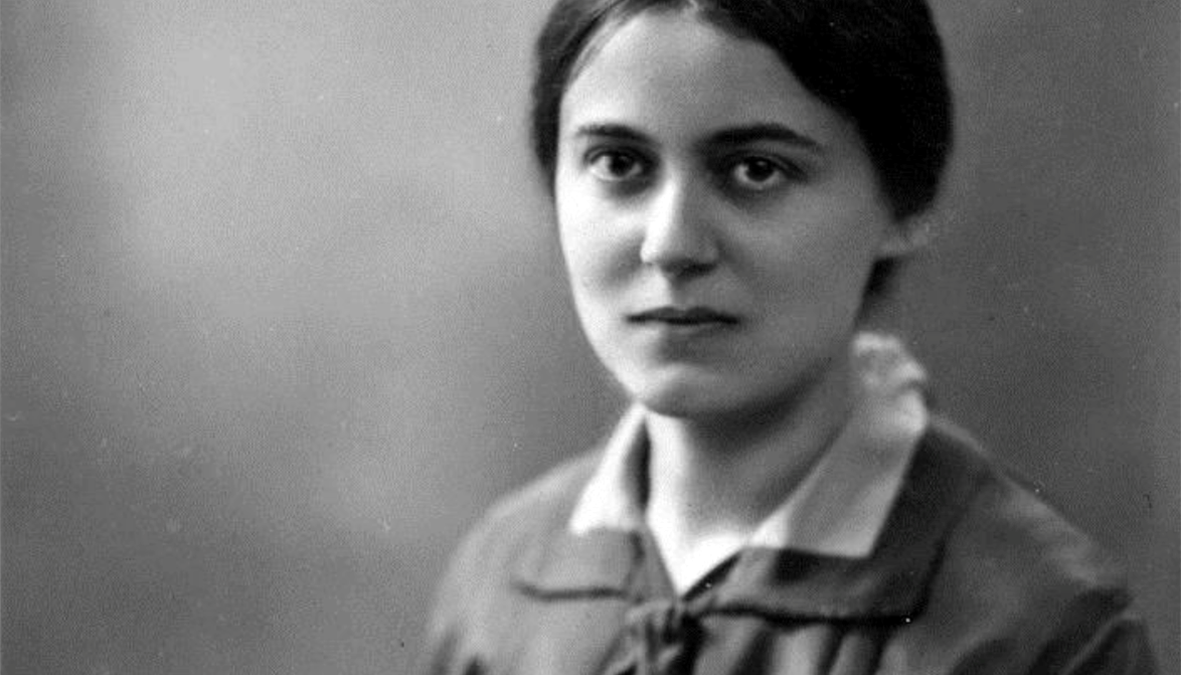
Unity Corner is a regular feature on Christian unity by Dr Ian Watson, County Ecumenical Officer for Norfolk and Waveney. In this report, he reflects on Edith Stein’s philosophy and its relevance for Christian unity.
In his 9 January 2026 address to the Diplomatic Corps, Pope Leo offered an important moral vision at a moment when the world’s political landscape is marked by rising conflict, eroding multilateralism, a breakdown in international law, and a troubling ‘zeal’ for war.
As someone committed to nurturing unity among Christians and fostering constructive engagement across different communities, I found the Pope’s address deeply encouraging. In a world too often divided by partisan interests and distrust, his call for humility, dialogue, and mutual respect not only provides a courageous Christian witness for peace, but also a model for all of us who long for unity in the Church. In acting on this longing, I am inspired by Edith Stein, also known as Saint Teresa Benedicta of the Cross. For me, she offers a refreshing perspective that contributes meaningfully to the ecumenical call.
Stein was a Jewish convert to Catholicism. She was a philosopher, a Carmelite nun, and was martyred in the gas chamber of Auschwitz. In her writings, she explored the profound connections that unite us, and at the heart of her approach is empathy. Her idea of empathy extends beyond its usual definition, which is simply understanding and sharing another person’s emotions. It is different because it involves a genuine connection and engagement with others, which I believe is also at the heart of Pope Leo’s call.
Interestingly, this more comprehensive view of empathy is akin to Aristotle’s view of pity. The contemporary Aristotelian philosopher Martha Nussbaum adopts this view in her understanding of compassion. She says: “In order for compassion to be present, the person must consider the suffering of another as a significant part of his or her own scheme of goals and ends. She must take that person’s ill as affecting her own flourishing. In effect, she must make herself vulnerable in the person of another” (Nussbaum, 2001).
It is in this sense that Stein’s empathy allows individuals to step into the experiences and perspectives of others. In ecumenical dialogue, this means genuinely looking to understand the beliefs, practices, and histories of different Christian denominations. In exercising this form of empathy, we are better able to appreciate the richness of each tradition, which helps to break down preconceived notions and stereotypes. In grasping the unique contributions that each tradition brings to the table, we are better able to foster a spirit of collaboration rather than division.
Empathy is, however, also the thing that helps connect Christians of different traditions through prudential concern and altruism. When we (together) see the suffering and challenges of our neighbour and the stranger, through no fault of their own, in our empathy we acknowledge the special obligations, as the followers of Christ, necessary to act (together) to foster the social fabric, secure the common good, and protect the environment – God’s creation.
Stein, however, did not stop at empathy. Another cornerstone of her thinking was the pursuit of truth. This also is something that can support our ecumenical endeavour. She believed that all Christians share a common quest to understand God and His revelation, and it is this shared journey that can be a powerful motivator for unity. In other words, when we engage with each other across traditions, it is an opportunity to discover deeper truths together in the same hope. By focusing on our common quest for truth, we build bridges that connect our diverse beliefs.
Stein’s more mystical writings remind us that our ultimate goal transcends denominational boundaries. She emphasised a mystical union with God that is available to, and a hope shared by, all believers. This shared aspiration gives a sense of togetherness and is a reminder that, at our very core, all Christians are striving for the same deeper relationship with the Divine – Jesus. Recognising this shared aspiration is a source of hope to focus on achieving the divine goal we share, instead of being distracted by the differences that exist between us.
Community and social responsibility are also central to Stein’s vision. She believed that the Church should be a force for good in the world, working collaboratively for justice. In today’s world, where social issues often divide us, her view (also captured in Catholic Social Teaching) is an encouragement for us to unite, not only in prayer but in action. What she means is that by coming together to address poverty, injustice, and environmental concerns, we offer a Christian witness to the love of Christ. Our collective efforts show that Christianity is not only about private and individual beliefs, but about living out our shared values as one community, one Church – the Body of Christ.
That said, Stein did respect individual spiritual journeys and different paths to God. Even here, her view is helpful as it underscores the idea that unity does not require uniformity. It is true that she cherished her Catholic faith (as I do) but, importantly, she also recognised the beauty in the diverse traditions that lead to God.
Sadly, Stein’s life was marked by deep suffering, particularly during the Second World War, when she was arrested by the Nazis and sent to Auschwitz, where she was martyred in 1942. One of the most moving things about Stein was her acceptance of suffering. The only way to really understand this is through the lens of the Gospel, which teaches that suffering can be redemptive: “Not only that, but we rejoice in our sufferings, knowing that suffering produces endurance, and endurance produces character, and character produces hope” (Romans 5:3–4).
She herself reflected a great deal on her sufferings. She believed that when we acknowledge our pain, along with the pain of others, we cultivate a spirit of empathy and solidarity or, in other words, compassion. Stein’s perspective, therefore, invites us to view our collective suffering and challenges as a pathway to deeper communion with one another and with Christ, who suffered for us all (see 1 Peter 2:24). This generates not only empathy but, ecumenically, respect for other Christian traditions. In turn, this leads us to seek common ground while, of course, celebrating our unique identities. Reconciled diversity, in this sense (and as Pope Francis used to say), deepens our understanding of God and His Church, without sacrificing unity on the altar of uniformity.
The last idea of Stein’s I want to highlight is her view that we need to integrate faith and reason. This need is particularly relevant in today’s world, dominated as it is (at least in the West) by scientism and secularism. She believed that our scientific inquiries could enrich our spiritual lives – a view that many contemporary materialists, atheists and physicists still rail against. You will be relieved that I will not dredge the depths of philosophy to argue one way or the other – I bracket that debate! It is sufficient to say that I share Stein’s view, which invites us to value both intellectual exploration and spiritual insight. In the case of Christian unity, by adopting this view, we can say that through reason and faith we create together a more robust and fuller dialogue, which moves us closer to the truth but honours the richness of our individual traditions.
For me, Edith Stein’s philosophy provides a hopeful and engaging framework for supporting our desire for Christian unity. Through empathy, the pursuit of truth, a shared mystical relationship with God, a commitment to community, and the integration of faith and reason, we find the common threads that bind us together as brothers and sisters in Christ. This is a sentiment I am sure Pope Leo (a true universal servant of unity) would share.
Bio
Edith Stein (1891–1942), also known as St Teresa Benedicta of the Cross, was a Jewish philosopher who converted to Catholicism and became a Discalced Carmelite nun. Her philosophical work was deeply influenced by phenomenology and Thomas Aquinas. Her journey from a secular Jewish background to becoming a Catholic saint exemplifies a profound search for truth. Stein’s philosophical inquiries led her to explore existential questions about the human condition, consciousness, and the nature of being. This groundwork prepared her for her eventual embrace of Christianity, illustrating how the pursuit of knowledge can lead to spiritual awakening. By examining her life and writings, we can draw valuable lessons on how to foster unity and peace, echoing the Gospel’s call for love, understanding, and reconciliation.
Photo of Edith Stein, courtesy of Parish of Saint Teresa Benedicta of the Cross.