

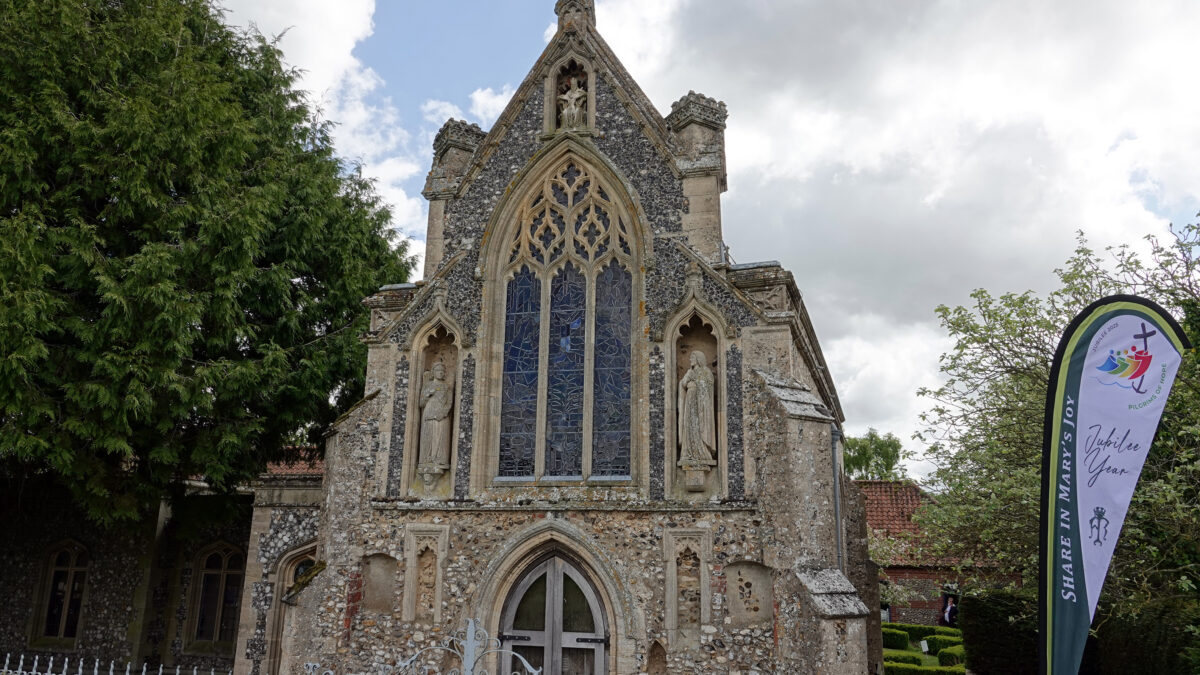
That is just before William the Conqueror came and conquered, when Edward the Confessor was King and when (through the amazing researches of Fr Michael Rear) we can now be confident that a very young widow, barely in her twenties, had the vision of Our Lady telling her to build a replica of the Holy House in Nazareth, where she, Mary, was visited by Gabriel and invited to be the Mother of God. The story told in the above ballad tells us (this is uncorroborated but wonderful to contemplate) that after her workmen failed to build it, angels came and completed the task for them. From 1061 to 1538 it was indeed a place of wonder, growing from a small wooden chapel to the second most visited place of pilgrimage in Britain and one of the four great sites of the Catholic world, visited by 14 kings and their wives (to ask Our Lady to help them have children, to give thanks for the safe delivery of a child, to give thanks for victory in war (Henry VIII did all three) or – as a remorseful Henry VII did – to atone for his rapacity and greed, Henry spending time in penitence in Walsingham to coincide with his surrogates praying for him at the Holy Places in Jerusalem). By then it was visited by tens of thousands every year, quite likely more popular than ever.
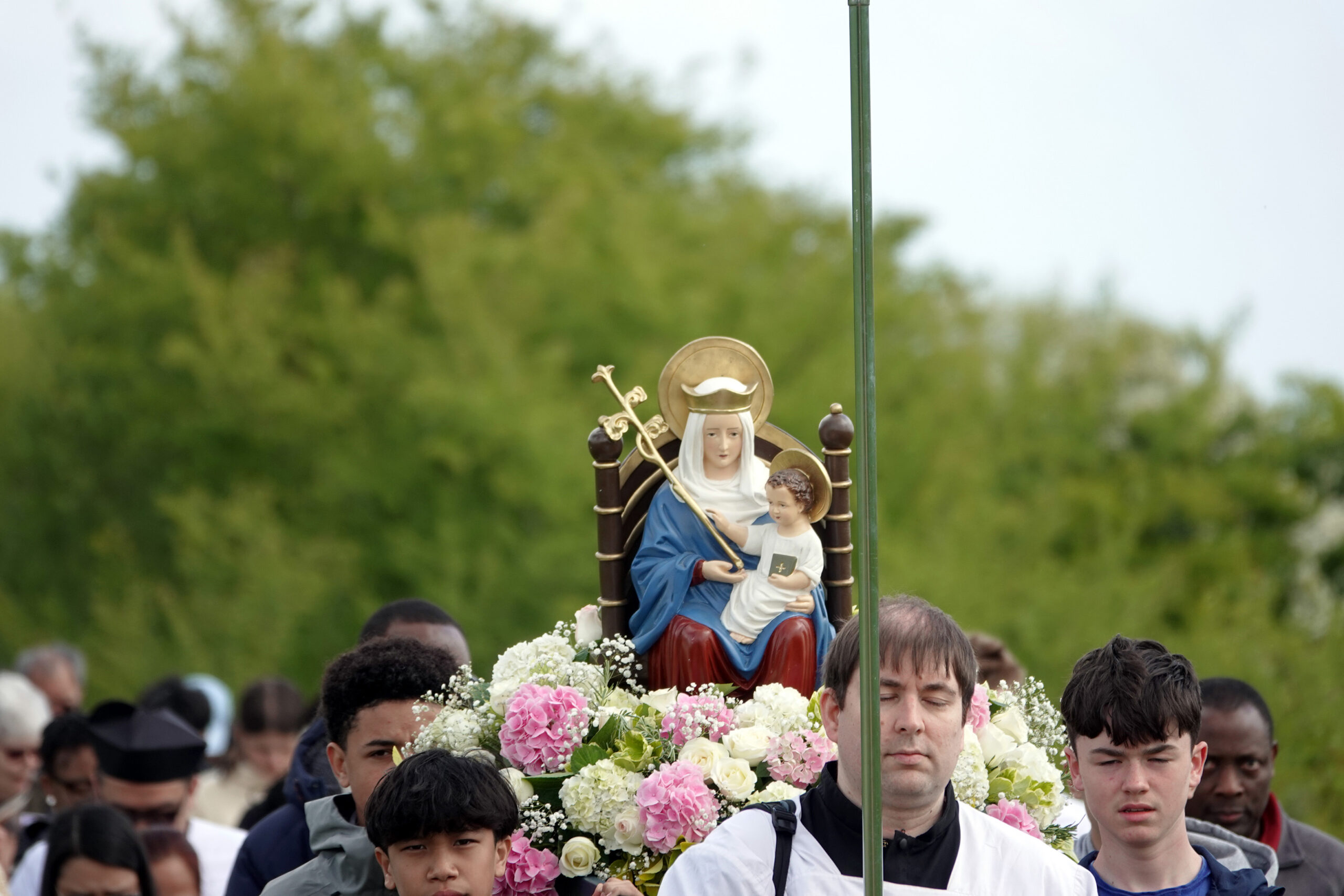
The Holy House was now contained within a larger chapel that was part of a vast priory church where 25 Augustinian friars prayed daily, and it was a kind of medieval theme park. Having walked 130 miles from London, stopping at religious houses along a well-beaten track, or the 26 miles from (King’s) Lynn, reached by many by ship from the North or from the continent of Europe, pilgrims had to decide in what order to visit and pray. Would it be the phial of the Virgin’s breast milk, the knuckle of St Peter, the glorious works of craftsmanship donated by grateful monarchs, the two holy (and healing) wells, and of course the Holy House itself and the magnificent statue of Our Lady enthroned and looking serenely at us as she points to her Son, alert on her knee? Would you want to keep the best for last, or go to her chapel when the queues were shortest?
And then in 1538 King Henry VIII, paranoid and vindictive, agreed to let his vandals descend on Walsingham (and 800 other monasteries and religious houses) and in a single day destroy the Holy House and strip it of everything of financial value. The statue, according to fairly reliable accounts, was carried off to London where it was first mutilated and then burned in front of the house of St Thomas More, martyred two years earlier for refusal to accept Henry’s adulterous marriage to Anne Boleyn and his schism from Rome. Fairly soon, almost all the stonework was (mis)appropriated to build lavish houses for those who bought the lands belonging to the Abbey.
For a century it was a site of contested memory: a popular ballad recalled the vandalism and wilful destruction of Walsingham, and its tune became the basis for keyboard music by secret Catholic composers at the royal court (William Byrd and John Bull). More dramatically, Shakespeare’s plays and sonnets (many believe him to have been a secret Catholic) evoke memories of Walsingham and its ballad. (The most obvious is the first of Ophelia’s ‘mad’ songs in Hamlet, written in the same unusual metre, with its references to ‘cockle hat and staff, and his sandal shoon’ (i.e. a precise description of pilgrim’s garb), described by Gertrude as ‘snatches of old tunes’.) The most widely disseminated maps of England made in the period before 1630 all give prominence to Walsingham. It was remembered by some as a place of idolatry but by others as a holy place, vandalised by a rapacious monarch. The civil wars changed English ideas of what mattered in the past, and the ‘bare ruin’d choirs’ (Shakespeare’s phrase) lay gaunt and taken for granted for the next 200+ years.
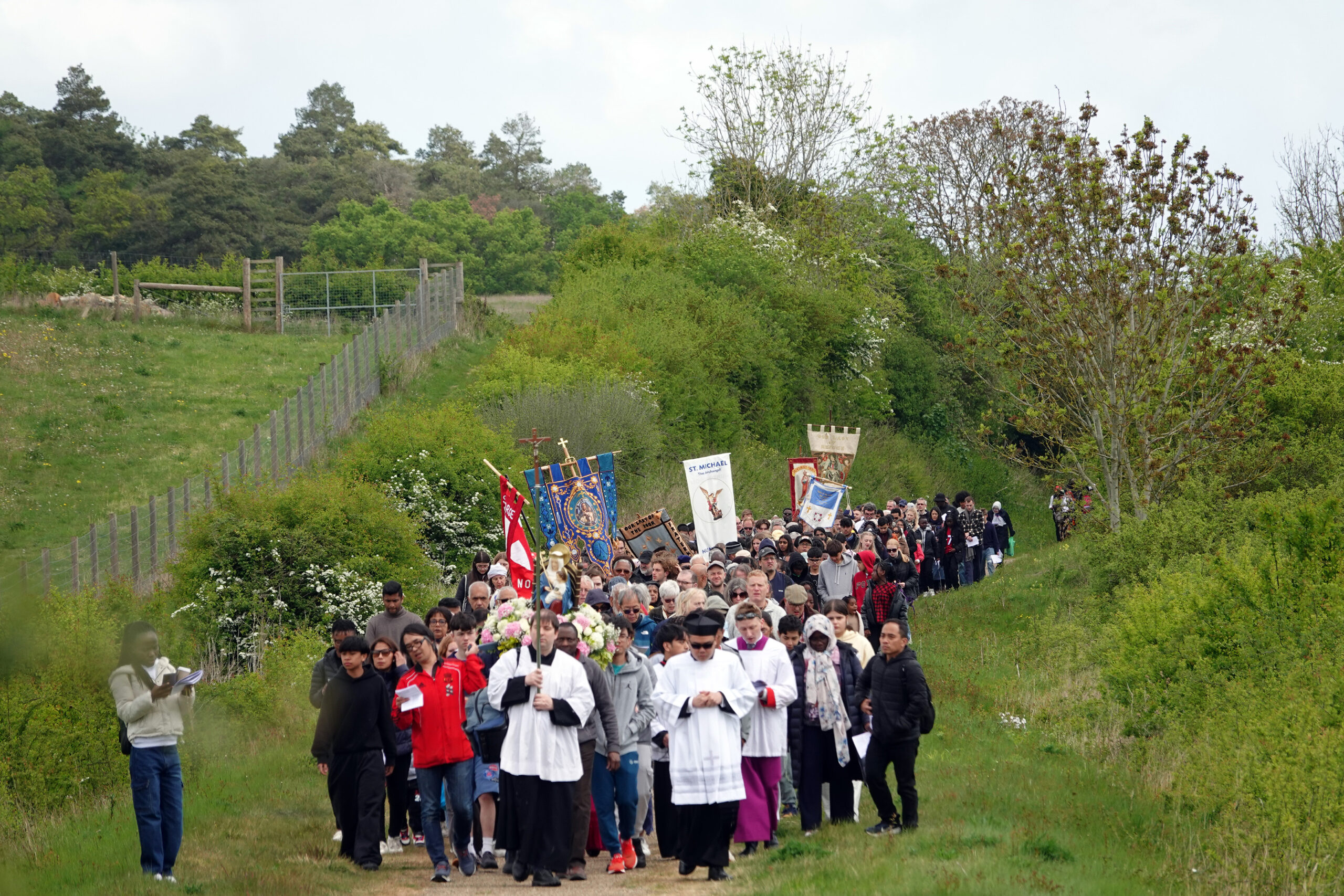
And then the great restoration in 1850. First, as a late flowering of the Anglo-Catholic movement in the Church of England, and then by Catholics with a special devotion to Our Lady, deeply religious ladies and energetic priests began to create a new Walsingham to restore places of stillness, devotion and immanence. The site of the Priory Church, with its single surviving chancel arch and a marker on the ground where once the Holy House stood, remains a gaunt ruin. But over the Holy Wells the Anglicans built their shrine, with a reimagined Holy House and many sites of prayer and hospitality. The Catholics, inspired, focused on the Slipper Chapel, a 14th-century chapel one mile from the original shrine, where pilgrims paused and prayed before their final barefoot walk to the Shrine itself. It survived because it was a useful farm building – cowshed – in the penal times. Beautifully restored, it became the Catholic National Shrine in 1934 and alongside it was, much later, built the large pilgrimage church where Masses are said daily to crowds of pilgrims, either in the building or – its glass doors thrown open – to large crowds outside.
“O England great cause hath thou to be glad to be
Compared to the land of promise, Zion,
Thou attainest by grace to stand in that degree
Through glorious Lady’s support
To be called in every realm and region
The Holy Land, Our Lady’s Dowry;
Thus art thou named in old antiquity.”
This is from the last part of the 1496 ballad and it is as much a call to us today as it was in 1496. What better way, as an individual, as a family, as a parish, to mark the Jubilee of the diocese than by following the millions of pilgrims over the past 965 years who have come to Walsingham to be with Our Lady, to celebrate her fiat, her ‘yes’ to God, and Richeldis’s ‘yes’ to building a shrine, and to renew our own faith and feel our own closeness to the one who draws us closer to her Son, our Saviour. Come to where the earth is saturated by prayer and devotion. Come for a time in the Slipper Chapel, take the ancient walk along the stream to the village, and come back by the old railway line, which is the new pilgrim way (or vice versa). Explore all the options to stay, to eat and drink, to embrace all that Walsingham has been, has suffered and has become. At the very least visit the website (https://www.walsingham.org.uk/ and the facilities in the village https://www.walsinghamvillage.org/) and, instead – or more sensibly, as well – come not only on your own, with the family or with a parish group, but on the Diocese of East Anglia pilgrimage on Bank Holiday Monday 4 May 2026. If you have never been (if you have been you will need no encouragement), do come in this very special year. For more, read Fr Michael Rear’s wonderful book Walsingham: Pilgrims and Pilgrimage (Gracewing, 2nd edn. 2019), £14.99 or so.